
Writen by
admin
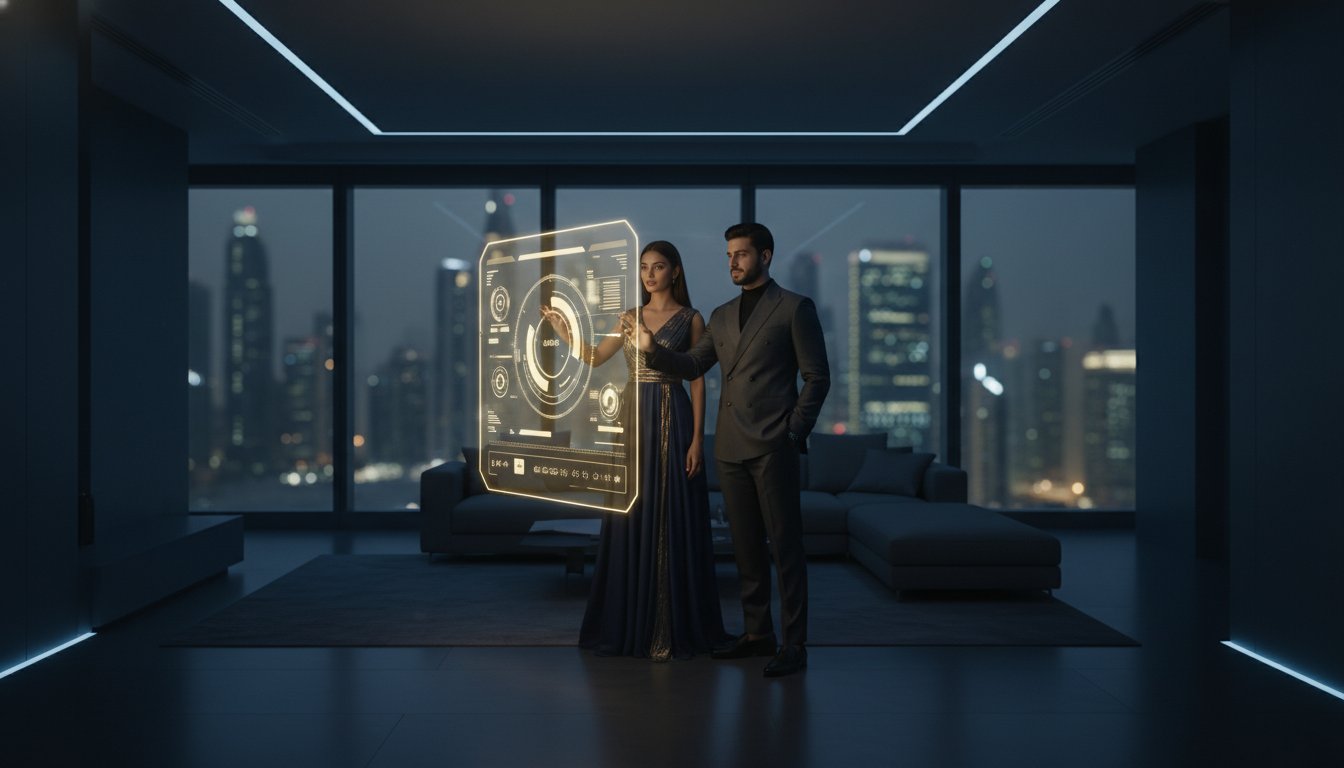
Imagine returning to your home during a 48°C August afternoon and finding your living room already cooled to a perfect 22°C, despite your AC remaining idle for most of the day. You don’t have to lift a finger or scroll through a dozen clunky apps to make it happen. It’s a reality where your home anticipates the intense summer heat and adjusts itself before you even feel it. You’ve probably felt the frustration of soaring utility bills or the headache of smart devices that simply refuse to talk to one another.
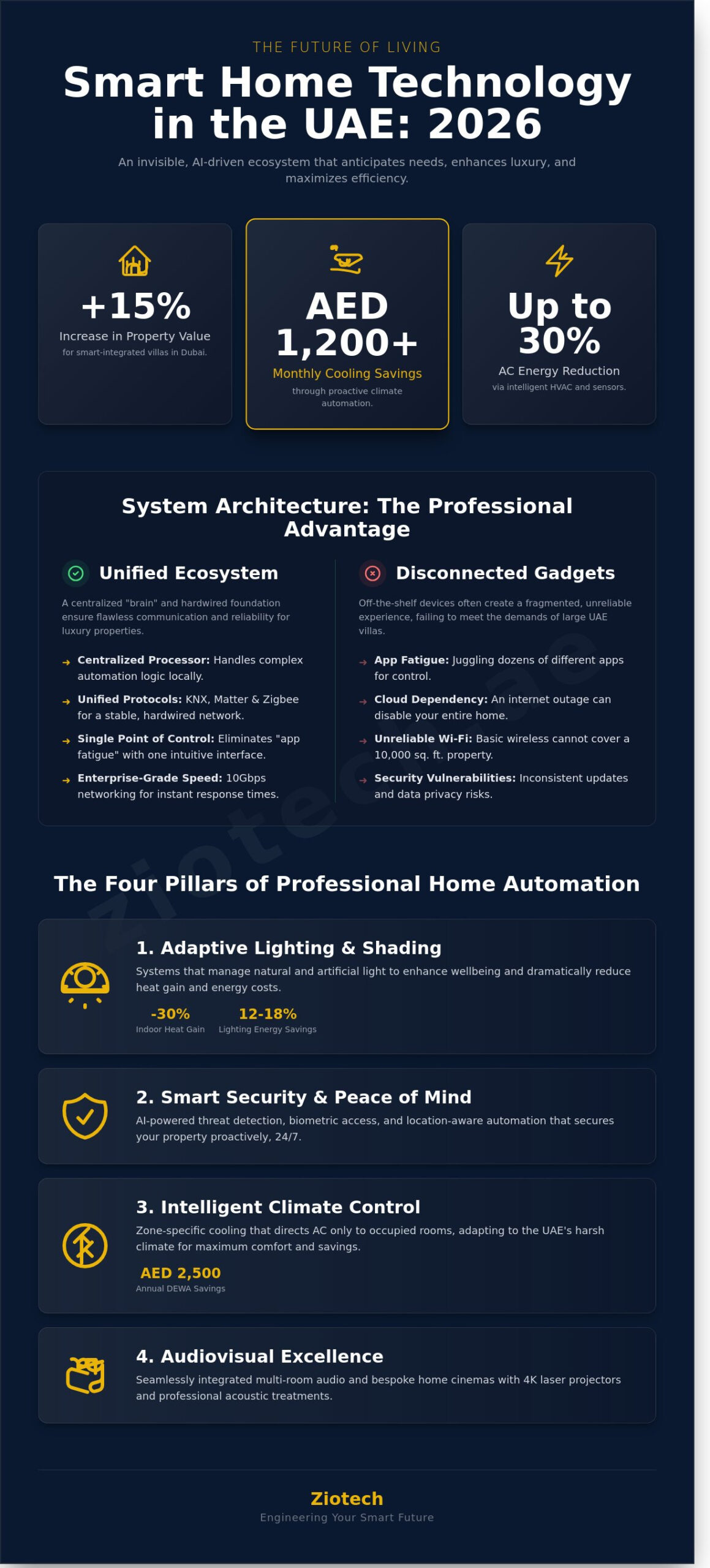
We know that luxury living in the UAE shouldn’t mean managing a second job as an IT technician. This guide from Ziotech reveals how the latest smart home technology in 2026 creates a truly invisible experience that can increase your property value by 15% while saving you over AED 1,200 monthly on cooling costs. You’ll discover the exact steps to unify your security, lighting, and climate control into one seamless system designed for the unique UAE environment. We’ll break down the essential upgrades that protect your privacy and your wallet as we move into a new era of home automation.
Key Takeaways
- Understand how 2026 smart home technology has evolved from simple voice commands into a proactive, AI-driven ecosystem that anticipates your daily needs.
- Discover how intelligent HVAC integration and occupancy sensors can reduce your AC energy consumption by up to 30% in the harsh UAE climate.
- Learn to enhance your luxury lifestyle through circadian lighting systems that improve wellbeing while maximizing energy efficiency across your property.
- Uncover the truth behind common myths about system complexity and data privacy to ensure your automated home is both user-friendly and highly secure.
- Explore why bespoke engineering and professional maintenance are essential for future-proofing high-end technology in the unique Emirates market.
What is Smart Home Technology in 2026?
Smart home technology has evolved far beyond the era of simple voice-controlled speakers. By 2026, it represents a fully integrated ecosystem where hardware and software work in tandem to create a proactive living environment. Understanding what is home automation today requires looking at how systems have transitioned from reactive tools to AI-driven managers. These systems don’t wait for a command; they use predictive algorithms to adjust lighting, security, and climate based on historical data and real-time environmental changes.
The UAE market currently leads global adoption rates for these advanced systems. In 2024, the regional smart home sector reached a valuation of AED 1.8 billion, with luxury villa projects in Dubai and Abu Dhabi seeing a 22 percent increase in integrated technology requests. Residents now prioritize “invisible technology,” where touch panels and sensors are recessed into the architecture to maintain a clean aesthetic. This shift ensures that the tech serves the home’s design rather than cluttering it.
The Core Components of a Smart Ecosystem
A robust smart home relies on a centralized processor that serves as the “brain” of the property. This hardware handles the heavy logic required for complex automation scenes. It stays supported by enterprise-grade networking foundations that provide 10Gbps speeds, ensuring every device remains connected. Sensors and actuators function as the system’s senses, detecting everything from moisture levels in the garden to the specific CO2 levels in a bedroom, allowing the house to breathe and react autonomously.
Smart Gadgets vs. Professional Integration
Off-the-shelf gadgets often fail to meet the demands of large-scale UAE properties. A 10,000-square-foot villa cannot run reliably on basic Wi-Fi devices. Professional integration utilizes unified protocols like KNX, Zigbee, and Matter to create a stable, hardwired foundation. This professional approach eliminates “app fatigue” by consolidating every subsystem into a single point of control. It ensures that the home’s security, entertainment, and cooling systems communicate through a localized network rather than relying on inconsistent cloud servers.
The Four Pillars of Professional Home Automation
Professional automation isn’t just about standalone gadgets; it’s a way to create a unified ecosystem. To grasp the core concepts, this foundational guide to smart homes offers a clear starting point for beginners. In the UAE, where summer temperatures frequently peak at 48 degrees Celsius, smart home technology is a vital tool for managing both comfort and high utility costs. High-end systems focus on four distinct areas that transform a standard villa into an intelligent living space.
Adaptive Lighting and Shading
Automated shades are essential for thermal management in the Gulf. These systems use solar tracking to lower blinds as the sun hits specific windows, which can reduce indoor heat gain by 30%. Scene-based lighting does more than set a mood. It manages energy-efficient LEDs to mimic natural daylight patterns, improving sleep quality and focus. Smart management helps households cut lighting-related energy use by roughly 12% to 18% compared to manual switching.
Smart Security and Peace of Mind
Modern security relies on AI-powered threat detection that filters out false alarms from pets or moving trees. Integration with biometric access ensures only authorized residents enter the villa. Geofencing is a location-aware feature that automatically secures your property by locking doors and arming sensors once your smartphone crosses a virtual boundary away from home. This provides 24/7 visibility for residents who travel frequently through Dubai International Airport. You can consult with local specialists to design a system that fits your specific floor plan.
Professional smart home technology also encompasses critical infrastructure for climate and entertainment:
- Climate Control: HVAC integration allows for zone-specific cooling. By only cooling occupied rooms, homeowners can save up to 2,500 AED annually on DEWA bills.
- Audiovisual Excellence: Multi-room audio provides synchronized music throughout the home. Bespoke home cinema experiences now feature 4K laser projectors and acoustic treatments that rival commercial theaters.
By centralizing these pillars, you don’t just add features; you increase the property’s market value. Data from 2023 indicates that smart-integrated villas in Dubai attract a 5% to 7% premium over traditional homes.
Smart Home Myths vs. Reality: Addressing Common Fears
Adopting smart home technology often triggers hesitation because of outdated misconceptions. Homeowners in Dubai and Abu Dhabi often worry that high-tech systems are prone to hacking or will become obsolete before the next summer heatwave. Real estate data from 2024 indicates that integrated systems actually increase property resale value by 5% to 8% in the UAE market. For a villa priced at AED 4,000,000, this translates to an additional AED 200,000 to AED 320,000 in equity. Modern systems are modular, meaning you don’t replace the entire setup every year; you simply update software or swap a single sensor. This ensures your investment remains relevant for at least 15 years.
Myth: Smart Homes are a Security Risk
Security is the top concern for families, but there’s a massive difference between cheap gadgets and professional systems. While entry-level devices rely on public Wi-Fi, professional installations use local processing and isolated VLANs. These systems keep data within the house rather than on a vulnerable cloud server. When you research the best smart home devices, you’ll see that top-tier options prioritize hardware-level encryption. Professional firewalls make an integrated home harder to breach than a house with physical keys that can be easily duplicated at a local shop.
Myth: Integration is Too Complicated
People imagine confusing dashboards, but the reality is “One-Touch” simplicity. Modern smart home technology is designed to remove friction from your daily routine. A single button labeled “Away” can turn off the AC, close curtains to block the UAE sun, and arm security sensors. Systems cater to every family member through various interfaces:
- Voice Control: Simple commands for children or the elderly to adjust room temperature.
- Wall Keypads: Familiar physical buttons for guests who aren’t tech-savvy.
- Automation: Sensors that adjust lighting based on movement, requiring zero manual input.
The transition to a smart home isn’t about learning new tech; it’s about the tech learning your habits. By removing manual tasks, these systems reduce DEWA utility bills by an average of 15% through smarter climate and lighting management. The reality is that a professionally installed system is more reliable and easier to maintain than the collection of mismatched remotes most people use today.
Maximizing Energy Efficiency in the UAE Climate
Living in the UAE means battling outdoor temperatures that often exceed 45°C during summer months. In this harsh environment, smart home technology serves as the primary defense against skyrocketing utility bills. Statistics from regional energy audits show that air conditioning accounts for approximately 70% of a typical villa’s electricity consumption. By installing smart thermostats, residents can reduce their cooling energy usage by up to 30%. These systems learn your daily routine and adjust temperatures automatically. You won’t waste money cooling an empty house while you’re at the office or traveling abroad.
Occupancy sensors take efficiency further by directing airflow only to occupied rooms. This prevents the unnecessary expense of cooling a 5,000 square foot property when you’re only using the master suite or kitchen. For homeowners participating in the DEWA Shams Dubai initiative, smart systems integrate seamlessly with solar panels and battery storage. You can monitor energy generation in real-time and switch to battery power during peak tariff hours to save hundreds of AED. Outside the home, automated irrigation systems use local weather data to skip watering cycles during high humidity or rare rain events, which cuts water waste by 50% annually.
Advanced HVAC Optimization
Precise climate control is vital for local luxury properties. Integrating Variable Refrigerant Flow (VRF) systems allows for individual room temperature management without the energy loss found in traditional ducted systems. Smart controllers also manage humidity levels to keep them between 45% and 55%. This specific range protects interior finishes and expensive art collections from the UAE’s coastal dampness. Predictive cooling uses external weather forecasts to pre-chill the home before the midday heat peak, which prevents the AC compressors from overworking during the hottest hours.
Sustainable Living through Automation
Modern smart home technology platforms provide real-time energy reports that show exactly where every fils is spent. Homeowners use automated “Away” modes to shut down non-essential electronics and lighting with a single tap on a smartphone. Automated shading is another critical tool for the desert climate. Motorized blinds close automatically when sensors detect direct sunlight hitting the glass, which reduces the thermal load on AC units by 15% during the peak of the day.
Ready to lower your monthly DEWA bills? Explore our energy-efficient smart home technology solutions today.
The Ziotech Advantage: Engineering Your Smart Future
Ziotech has led high-end technology integration across the UAE since 1999. With over 25 years of expertise, we’ve refined a process that turns complex hardware into a unified living experience. Our team manages every phase, from the initial architectural drawings to the final system handover. We believe professional programming is the true differentiator. Without expert coding, even the most expensive smart home technology becomes a source of frustration rather than convenience. A poorly programmed system leads to laggy responses and interface crashes that diminish your home’s value.
Bespoke Design and Installation
We work directly with your architects and interior designers starting at the shell and core stage. This collaboration ensures that hardware from elite brands like Crestron and Control4 blends into your home’s aesthetic without visible clutter. Every project undergoes a 72 point testing protocol before you move in. We check every circuit, sensor, and interface to guarantee 100 percent reliability from day one. Our technicians handle the procurement and installation of every component, ensuring that the final result matches the bespoke digital blueprints approved at the project’s start.
Support and Future-Proofing
Maintaining a sophisticated system requires more than just a setup. Our Annual Maintenance Contracts (AMC) provide a safety net for your investment, with basic packages starting at approximately 4,500 AED. These contracts include:
- 24/7 Technical Support: Immediate assistance for any system glitches or user questions.
- Preventative Checks: Bi-annual hardware inspections to identify wear and tear before it causes a failure.
- Software Optimization: Regular updates that bring new features to your existing hardware without requiring new purchases.
Technology evolves quickly, but your home shouldn’t become obsolete. Our scalable solutions grow with your family’s needs. Whether you’re adding a new cinema room in Dubai Hills or upgrading security in Saadiyat Island, our systems adapt. This longevity is why we remain the preferred choice for smart home technology in the region. We ensure your system remains as fast and responsive in year five as it was on the day of installation.
Embrace the Future of Living in the UAE
The landscape of living in the Emirates is shifting toward intuitive environments that prioritize comfort and sustainability. By 2026, integrating advanced smart home technology isn’t just a luxury; it’s a strategic move to slash AC energy consumption by up to 30% during peak summer months. You’ve seen how professional automation replaces cluttered apps with unified control systems that actually work. Reliability is essential in our specific climate. That’s why Ziotech leverages 25+ years of regional experience to ensure your hardware survives the local heat and humidity. We don’t just install devices; we engineer long-term solutions as Certified Crestron and Control4 Platinum Partners. Every installation includes full AMC support for long-term reliability, so your system stays as responsive as the day it was fitted. Your home should anticipate your needs and simplify your daily routine. It’s time to elevate your property’s value and your quality of life simultaneously.
Consult with our expert engineers today to design your dream smart home
The future of your home is ready when you are.
Frequently Asked Questions
How much does a professional smart home system cost in the UAE?
A professional entry-level smart home technology setup in the UAE typically starts at AED 15,000 for a three-bedroom apartment. For a luxury villa in areas like Palm Jumeirah, full-scale automation including lighting, climate, and security often ranges between AED 80,000 and AED 250,000. These costs cover hardware, wiring, and professional programming by certified integrators.
Can I install smart home technology in an existing villa or only in new builds?
You can install smart home technology in both existing villas and new builds. Retrofitting is common in older Dubai properties using wireless protocols like Zigbee or Z-Wave, which avoid the need for tearing down walls. Statistics from 2023 show that 65% of UAE smart installations are now retrofits in established communities like Emirates Hills or Jumeirah.
What happens to my smart home if the internet goes down?
Your lights, switches, and pre-set schedules will continue to function locally if the internet goes down. Professional systems run on a local area network, so you won’t lose control of your physical wall switches or internal automation triggers. You’ll only lose remote access through your phone and voice assistant features until the connection returns.
Will smart home technology actually increase my property value?
Smart home technology increases property value by an average of 5% to 8% in the Dubai real estate market. A 2023 survey by local property portals found that 78% of UAE renters and buyers are willing to pay a premium for homes with integrated smart security and energy-saving features. It makes your property stand out in competitive listings.
How does smart technology help with AC bills in the summer?
Smart thermostats reduce AC bills by 20% to 30% through precision scheduling and occupancy sensors. In the UAE summer, where cooling accounts for 70% of a home’s electricity usage, this translates to savings of approximately AED 400 to AED 900 per month for a standard villa. The system learns your routine and stops cooling empty rooms automatically.
Are professional systems like Crestron and Control4 compatible with Apple HomeKit?
Crestron and Control4 are compatible with Apple HomeKit through official bridges or software drivers. While they’re independent professional ecosystems, most 2024 installations include a HomeBridge or native Matter support to allow Siri voice control. This gives you the stability of a professional backbone with the convenience of the Apple interface you already use.
How long does a typical smart home installation take?
A standard installation for a four-bedroom villa usually takes between 10 and 15 working days. This timeline includes the physical hardware mounting, network configuration, and the final 48 hours of stress testing. Larger, custom-built projects in Dubai Hills can take up to 3 months if they involve complex cinema rooms or extensive outdoor landscaping audio.
Is my data private when using a professionally installed smart system?
Your data is significantly more private with a professional system compared to DIY gadgets. Systems like Lutron or Savant process data locally on a dedicated hub rather than sending every command to a public cloud server. Professional installers also implement enterprise-grade firewalls and VPNs that meet the UAE’s 2021 Data Protection Law standards to prevent unauthorized access.
