
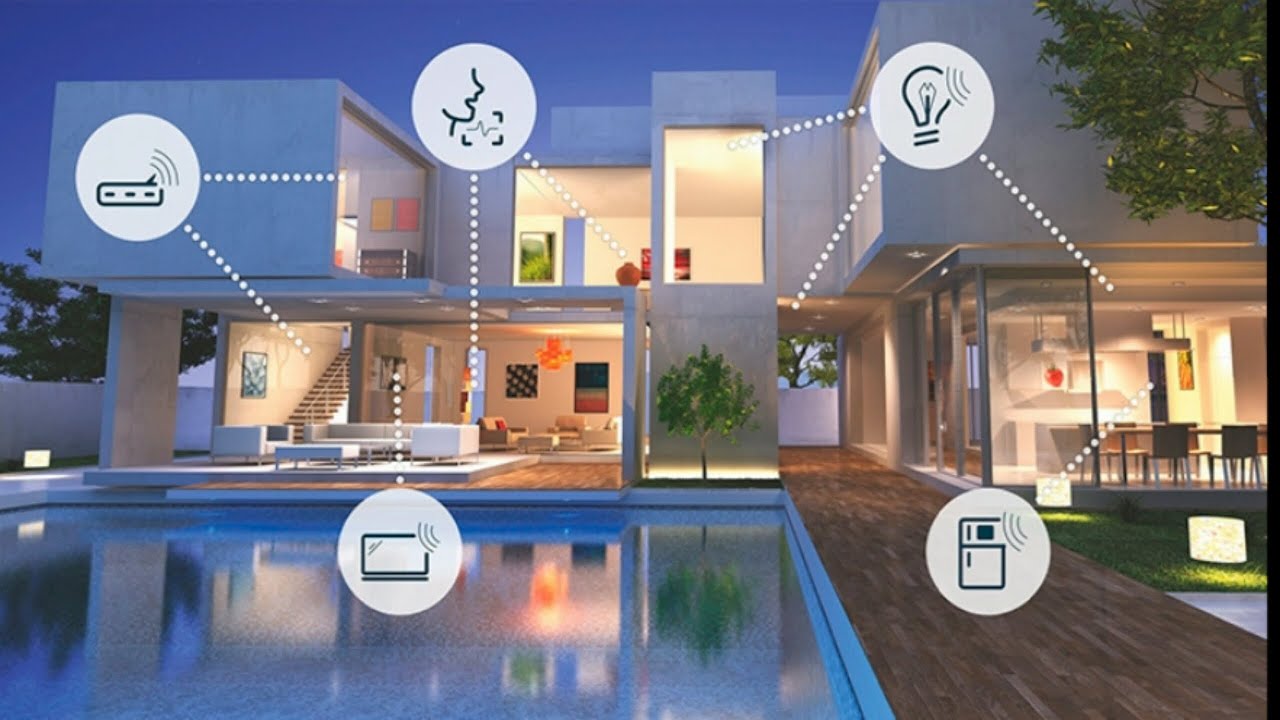
Retrofitting Smart Home Automation Into an Existing Dubai Villa: A Complete Guide
The majority of home automation projects in Dubai are not new builds. They are existing properties — some just a few years old, some approaching fifteen — where the owners have decided, for a variety of reasons, that they want to add proper smart home automation without undergoing a full renovation.
Retrofit automation is achievable. It is not always cheap, and it requires a more considered approach than a new-build project — but Zio Technologies successfully retrofits smart home systems into occupied Dubai villas every week. Here is exactly what the process involves, what it costs, and what you should expect.
The Core Challenge: Cabling in a Finished Building
New-build automation is straightforward because walls are open and cables can be pulled cleanly from point to point. In a completed villa, the walls are plastered, painted, and often tiled. Running new cables means one of two things: chasing (cutting channels into plaster or concrete, laying cable, making good), or going wireless. The right answer depends on what systems you’re adding and what existing infrastructure is already in the walls.
What Can Be Done Entirely Wirelessly (No Walls Opened)
Modern wireless protocols — Zigbee, Z-Wave, Matter, and RF-based systems — allow significant automation capability with no cabling whatsoever:
- Smart lighting: Wireless smart bulbs (Philips Hue, LIFX) or wireless dimmers (Lutron RadioRA3, Caséta) replace existing fittings without touching the wiring.
- Smart AC control: Wireless AC controllers (Sensibo, Cielo) plug into the IR receiver of existing fan coil units or AC units. KNX wireless thermostats mount over existing thermostat wiring.
- Motorised blinds: Retrofit motors (Soma Connect, Somfy Sonesse) clip onto existing blind rails without structural changes.
- Smart security: Wireless cameras (Ring, Arlo, Hikvision wireless), battery-powered motion sensors, and wireless smart locks require no cabling.
- Smart speakers and whole-home audio (streaming only): Sonos, Apple HomePod, and Denon HEOS provide multi-room audio via Wi-Fi without any in-wall speaker cabling.
A well-designed wireless system using these components can deliver 70–80% of the functionality of a wired system at significantly lower installation cost. For many villa owners, this is the right answer.
What Still Requires Cabling (And Why It’s Worth It)
Certain systems genuinely perform better with wired infrastructure, and the performance difference is noticeable:
- In-ceiling speakers: The audio quality of a wired in-ceiling system (Sonance, Klipsch) is substantially better than any wireless speaker. Cabling 6–8 ceiling positions in a villa requires wall chasing in some areas.
- Home cinema with dedicated room: A proper cinema requires HDMI or HDBaseT cables from the rack to the projector, speaker cables to all 7–11 speaker positions, and power for the screen. This requires dedicated cabling runs.
- Enterprise networking: Properly placed ceiling-mounted access points require POE cabling from a central switch. This is the infrastructure upgrade that most dramatically improves smart home reliability — and it cannot be done wirelessly.
- Full Crestron or Control4 system with wired keypads: Each wired keypad requires a CAT cable back to the control processor. In a retrofit, this is the most cable-intensive element.
The Retrofit Process: What to Expect Week by Week
| Week | Activity | Disruption Level |
|---|---|---|
| Pre-project | Site survey, system design, client sign-off on cable routes | None |
| Week 1 | Cable chasing and pulling (where wired elements required), access point installation | Moderate — dust, access to ceiling voids |
| Week 2 | Making good after chasing, equipment installation in AV rack or comms cupboard | Low |
| Week 3 | Device installation (switches, keypads, controllers, cameras) | Low |
| Week 4 | Programming, scene setup, testing, client training | Minimal |
The cable-chasing phase is the most disruptive. Zio Technologies manages this by preparing a detailed cable route map before work begins, minimising the number of chase runs by bundling cables wherever possible, and scheduling the most disruptive work during periods when the family is away or at particular times of day. We also retain a making-good team so that finished surfaces are restored to the same standard as before we arrived.
Can You Live in the Property During Retrofit?
Yes — most clients do. The disruption is real but manageable. Week 1 (cabling) is the most challenging: there will be dust, and access to certain rooms will be restricted during working hours. We provide dust sheets, negative pressure ventilation during chasing, and daily clean-downs. Families with young children typically prefer to schedule the cabling phase around a holiday trip.
Weeks 2–4 are considerably quieter: equipment installation, programming, and commissioning generate minimal disruption.
Retrofit Cost vs. New-Build Cost
For the same system scope, expect to pay 25–40% more on a villa automation project in Dubai than on a new-build, for three reasons: access difficulty (ceiling voids, concrete walls), making-good costs after cabling, and the additional project management required to coordinate around an occupied property.
The extra cost is real — but for owners who don’t want to wait for a new property or undergo a full renovation, it is the cost of doing it now, in the home you already live in.
The Five Upgrades Dubai Villa Owners Choose First
- Smart AC and climate control — Highest energy and comfort ROI
- Whole-villa Wi-Fi upgrade — The foundation everything else depends on
- Motorised blinds and shades — Energy saving and convenience
- Smart lighting in main living areas and master bedroom — Immediate lifestyle improvement
- Video doorbell and access control — Security and convenience from day one
