
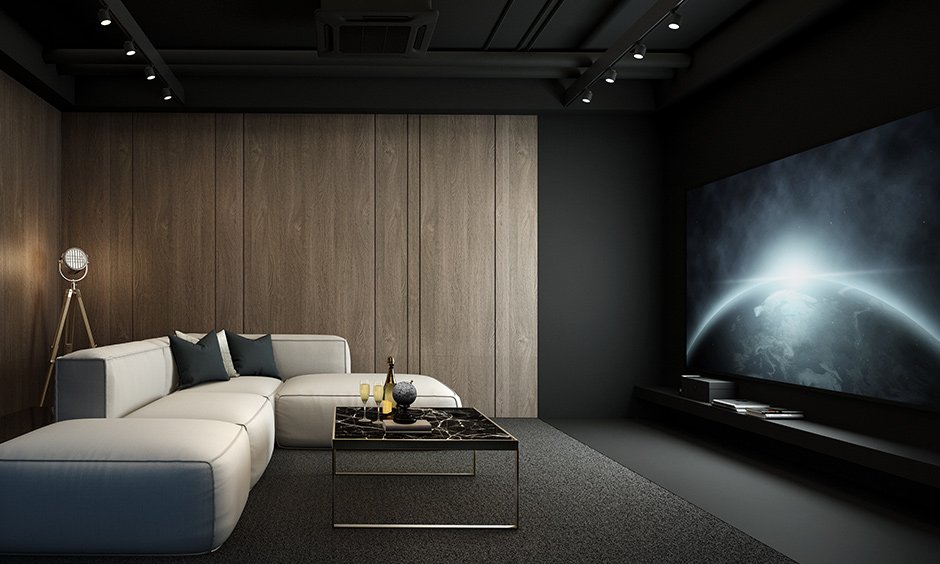
Walk into a poorly designed cinema room and the technology becomes irrelevant. A AED 150,000 projection system will still sound muddy and look flat if the room it lives in works against it. Cinema room design is not decoration — it’s physics. The acoustic treatment, the seating geometry, the lighting position, and the wall materials all affect what you see and hear, often more than the equipment itself.
This guide covers
home cinema interior design in Dubai
specifically — addressing the challenges of Dubai villa construction (high ceilings, concrete shells, hard surfaces everywhere) and the aesthetic standards expected at the luxury end of the market. :contentReference[oaicite:0]{index=0}
Why Dubai Rooms Are Acoustically Challenging
Dubai villa construction is predominantly concrete and plaster — hard, reflective surfaces that cause sound to bounce, creating reverb (echo) and comb filtering (certain frequencies cancelling each other out). A cinema room in a standard Dubai villa without treatment has a reverberation time (RT60) that is far too high for clear dialogue and accurate sound reproduction.Acoustic Panels: The Foundation of Sound Quality
Acoustic treatment is the single most important element of a cinema room — more important than the projector or the speakers. Without it, even the best equipment will perform poorly. Professional acoustic panels absorb mid and high frequencies, reducing echo and improving clarity. Bass traps in corners control low-frequency buildup, while diffusers scatter sound to maintain a natural acoustic environment. A properly designed home theatre solution will include acoustic calculations, panel placement planning, and material selection — not just decorative wall panels.Seating Design: Geometry Matters
Seating in a home cinema is not just about comfort — it directly affects viewing angles and sound perception. The distance between the screen and the seating position must be calculated based on screen size and resolution. Tiered seating is often required in larger rooms to ensure clear sightlines for all viewers. The primary seating position (the “sweet spot”) is also where audio calibration is focused, ensuring the most accurate sound experience.Lighting Design: Controlling Reflections
Lighting in a cinema room must be carefully controlled to avoid washing out the image. Direct light on the screen or reflective surfaces reduces contrast and ruins the viewing experience. Layered lighting design is key: indirect LED strips, wall sconces, and step lights provide visibility without interfering with the screen. All lighting should be dimmable and integrated into home theatre systems for scene control.Material Selection: More Than Aesthetics
The materials used in a cinema room significantly impact acoustics and visual performance. Hard surfaces like marble, glass, and polished wood reflect sound and should be minimized. Preferred materials include fabric-wrapped panels, acoustic carpets, and soft wall finishes that absorb sound. Even ceiling design plays a role, with acoustic clouds often used to control reflections from above.Screen Wall Design
The front wall of the cinema — where the screen is located — requires special treatment. Acoustically transparent screens allow speakers to be placed behind the screen, creating a true cinematic experience where sound appears to come directly from the image. This design is standard in high-end home theatre installations in Dubai and significantly improves audio realism.Ventilation and Heat Management
Cinema rooms contain heat-generating equipment: projectors, amplifiers, and AV racks. Without proper ventilation, performance and equipment lifespan are affected. A well-designed cinema includes silent ventilation systems that maintain airflow without introducing noise into the room.Integration with Smart Home Systems
Modern cinema rooms are fully integrated into smart home systems. A single “Cinema Mode” button can dim lights, close blinds, lower the screen, and start playback. This level of integration is a key part of integrated home theatre solutions and is expected in premium Dubai properties.Conclusion
A home cinema is not defined by its equipment alone. The room itself — its acoustics, layout, lighting, and materials — determines whether the experience is average or exceptional. Investing in proper design ensures that every component performs at its best, delivering a true cinematic experience in your home.